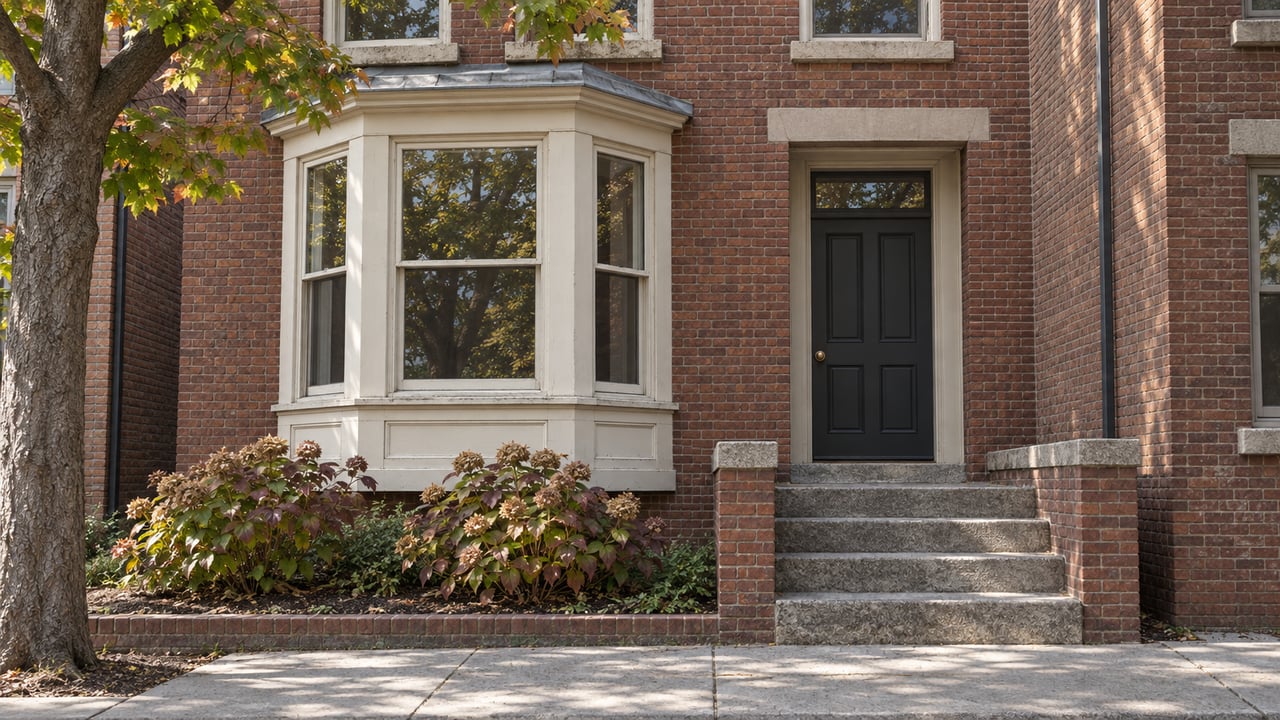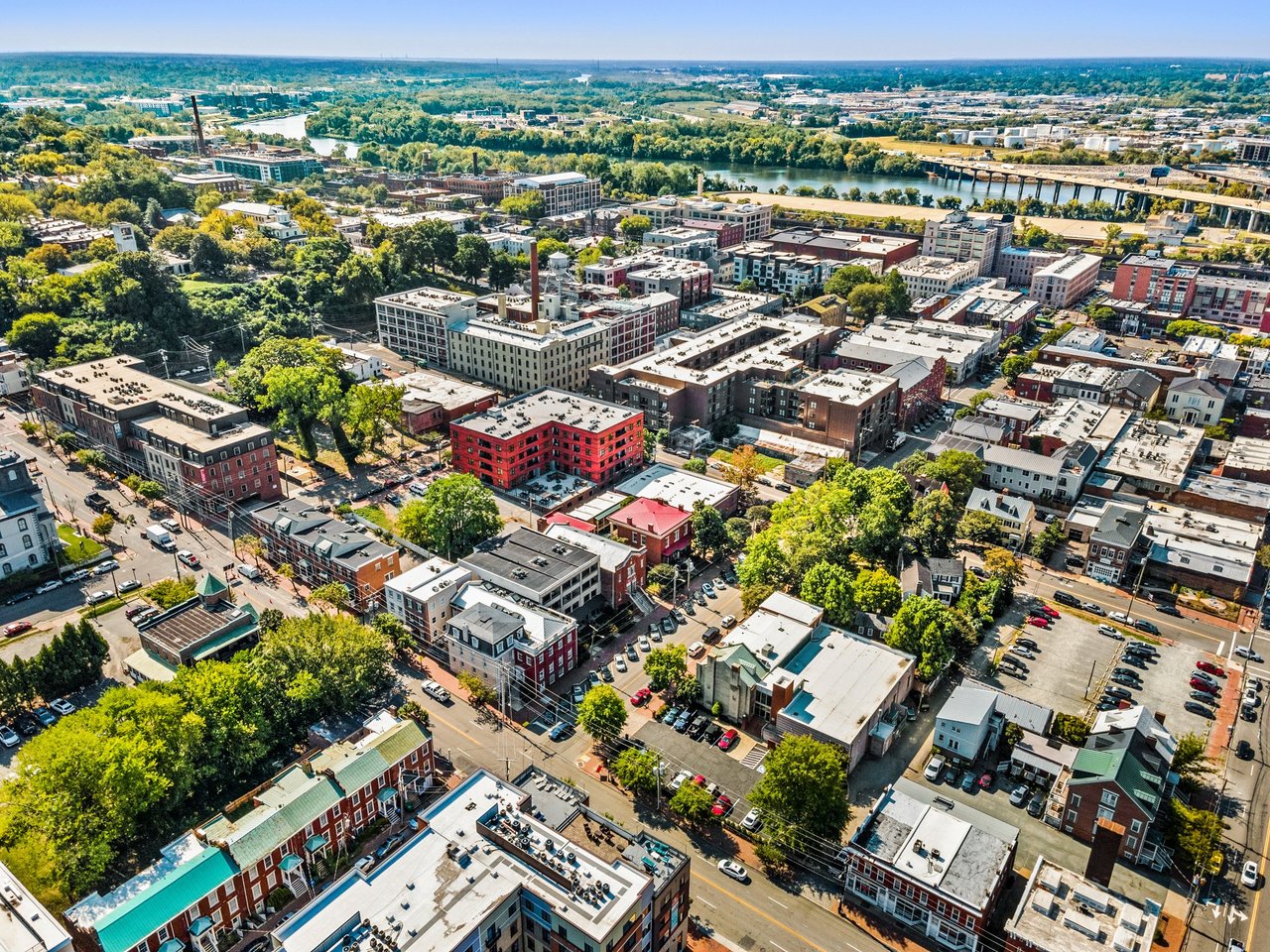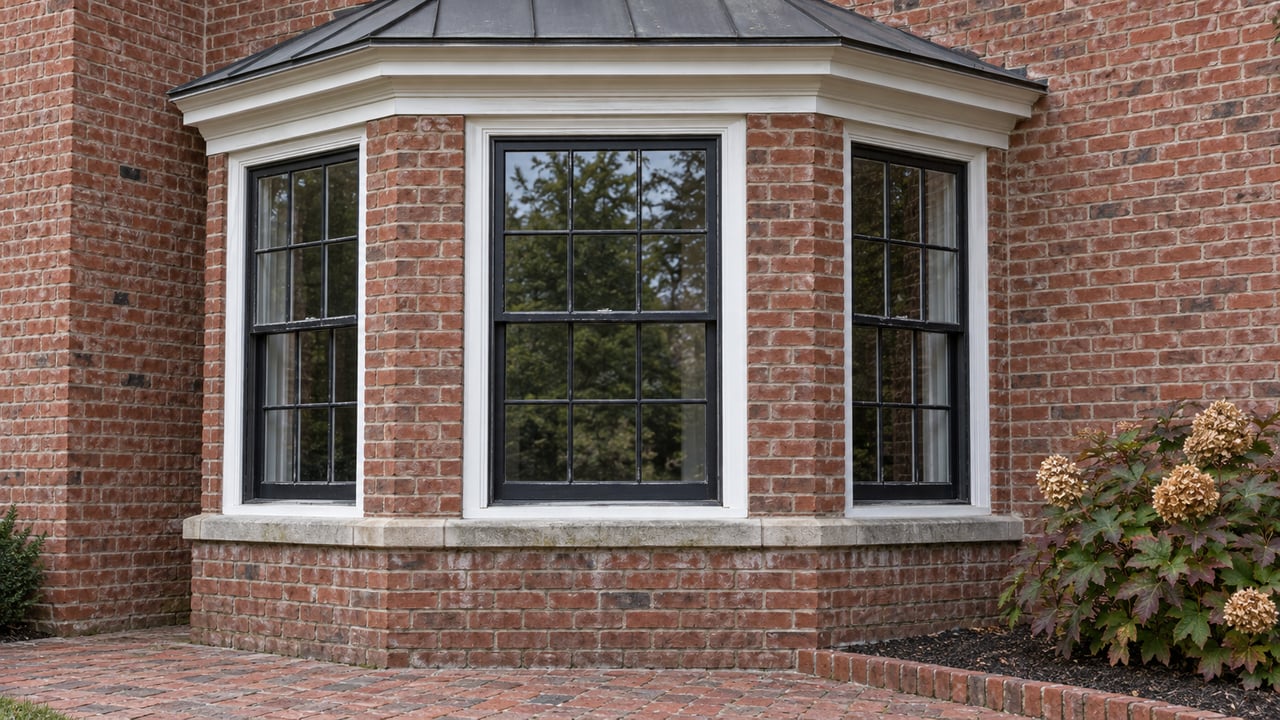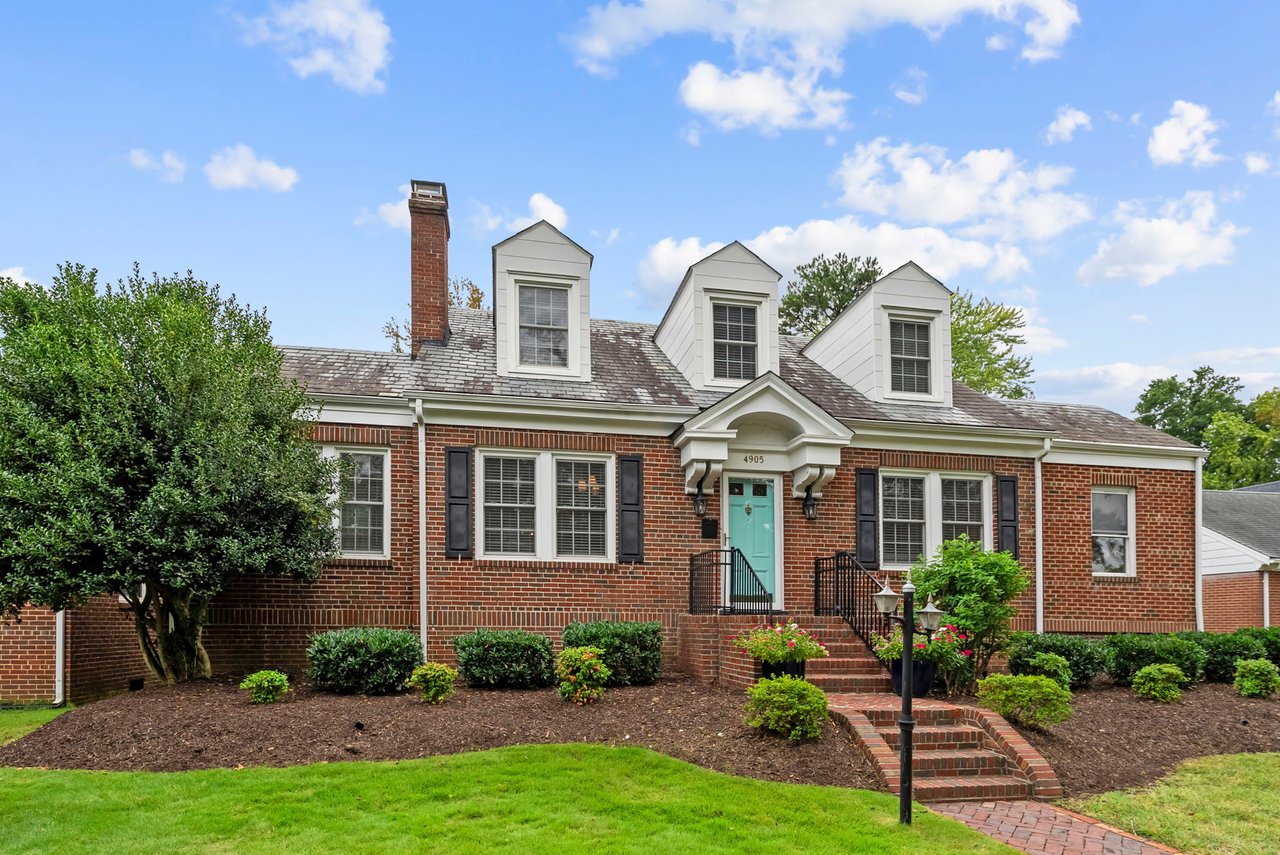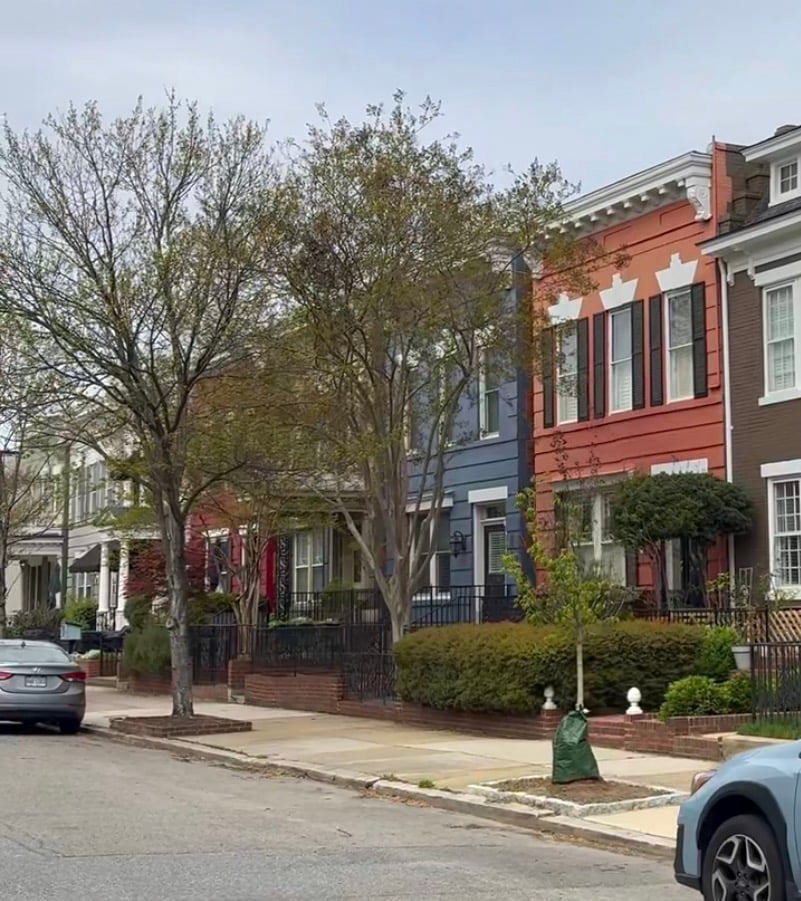
Walk down Grove, Hanover, Park or Monument Avenue and you're surrounded by more than a century of Richmond architectural history.
Behind some of those buildings is the work of Albert F. Huntt (1869–1920), an architect whose career coincided with one of the most important periods of growth in Richmond's historic neighborhoods.
Today, Huntt's surviving homes, churches, apartments and commercial buildings provide a fascinating window into the development of The Fan and the surrounding Monument Avenue corridor.
Huntt's Early Work on Grove Avenue
Some of Huntt's earliest residential work can be found on Grove Avenue.
The houses at 1501 and 1503 Grove Avenue, dating to 1895, showcase the influence of Richardsonian Romanesque architecture, with substantial masonry, brownstone details and arched entrances.
Huntt is also credited with the residence at 1502 Grove Avenue, while another particularly interesting example of his work sits farther west at 1700 Grove Avenue.
Built around 1907–08 for Cary Ellis Stern, 1700 Grove demonstrates Huntt's ability to draw inspiration from Richmond's earlier architecture. Architectural historian Robert P. Winthrop has noted similarities between its composition and Richmond's historic John Marshall House, adapted by Huntt to fit a narrow corner lot in The Fan.
Seven Homes on Hanover Avenue
Huntt's influence is equally visible along Hanover Avenue.
The homes at:
2114, 2116, 2118, 2120, 2122, 2124 and 2126 Hanover Avenue
form a particularly interesting concentration of his residential work.
Dating from around 1908, the houses demonstrate how architects and builders could create a cohesive streetscape without making every façade identical.
The result is exactly the type of architectural rhythm that makes walking through The Fan so interesting today: homes that clearly belong together while maintaining their individual identities.
Albert F. Huntt on Monument Avenue
As Richmond's residential development continued westward, Huntt also received commissions along Monument Avenue.
Documented or strongly established Huntt residences include:
1831 Monument Avenue The Henry H. George Sr. House, generally considered Huntt's first Monument Avenue residence.
2015 Monument Avenue The Joseph E. Sorg House, an elaborate design featuring an elliptical porch, Ionic columns and extensive ornamentation.
2031 Monument Avenue Designed in 1914 for George F. Jones and directly attributed to Huntt through Historic American Buildings Survey documentation.
2300 Monument Avenue A substantial residence where Huntt drew inspiration from Richmond's older Greek Revival townhouse tradition.
2306 Monument Avenue Built in 1913 and directly documented by the Historic American Buildings Survey as an Albert F. Huntt design.
2500 Monument Avenue A monumental composition drawing heavily from Richmond's antebellum Greek Revival architectural tradition.
2614 Monument Avenue A Colonial Revival residence dating to approximately 1912 and associated with James K. Dunlop.
Together, these houses demonstrate Huntt's versatility. His work wasn't defined by one architectural vocabulary. Instead, he borrowed from Richmond's architectural past while responding to the tastes of the early 20th century.
Huntt's Three Fan Churches
Some of Huntt's largest contributions to The Fan weren't houses at all.
Three prominent churches associated with Huntt remain part of the neighborhood:
Tabernacle Baptist Church — 1925 Grove Avenue
Monument Methodist Episcopal Church — 1801 Park Avenue
Westminster Presbyterian Church — 2501 Park Avenue
Their scale and classical architecture created monumental focal points among The Fan's predominantly residential blocks.
They also demonstrate just how broad Huntt's practice became.
More Than a Residential Architect
Huntt's portfolio extended beyond houses and churches.
His career included apartment buildings, schools, warehouses, industrial buildings and commercial projects throughout Richmond.
His work also included apartment projects along Monument Avenue, and later in his career he worked alongside architect Bascom J. Rowlett.
Huntt therefore wasn't simply designing individual homes. He was participating in the architectural development of a rapidly changing Richmond.
For references on Albert F. Huntt's Architectural works, please see the link here: https://www.dhr.virginia.gov/wp-content/uploads/2018/04/127-0248_Fan_HD_1985_Final_Nomination.pdf?utm_source=chatgpt.com
Another fantastic article written by Architecture Richmond cites many of the homes and works of Albert F. Huntt as well: https://architecturerichmond.com/architects-of-richmond-albert-f-huntt-1868-1920/
Why This History Still Matters
More than 100 years later, the buildings remain.
That's one of the reasons I find studying Richmond's historic neighborhoods so fascinating.
When you're walking through The Fan, you're not simply looking at a collection of attractive old homes. You're seeing the work of architects, builders and craftspeople whose individual decisions eventually created one of Richmond's most recognizable neighborhoods.
And that history matters in real estate.
When marketing a historic home, the story shouldn't begin and end with square footage, bedrooms and bathrooms.
Who designed it?
When was it built?
What architectural movement influenced it?
What original details remain?
How does it relate to the other homes on its block?
Those details can help buyers understand why a particular property is different—and why it can't simply be replicated somewhere else.
If you're considering selling a historic home in The Fan or elsewhere in Richmond, having an agent who understands the architecture and history behind these properties means having an advocate who knows how to identify and showcase what makes your home special.
Gary Martin Historic Homes Specialist Richmond, Virginia Real Estate