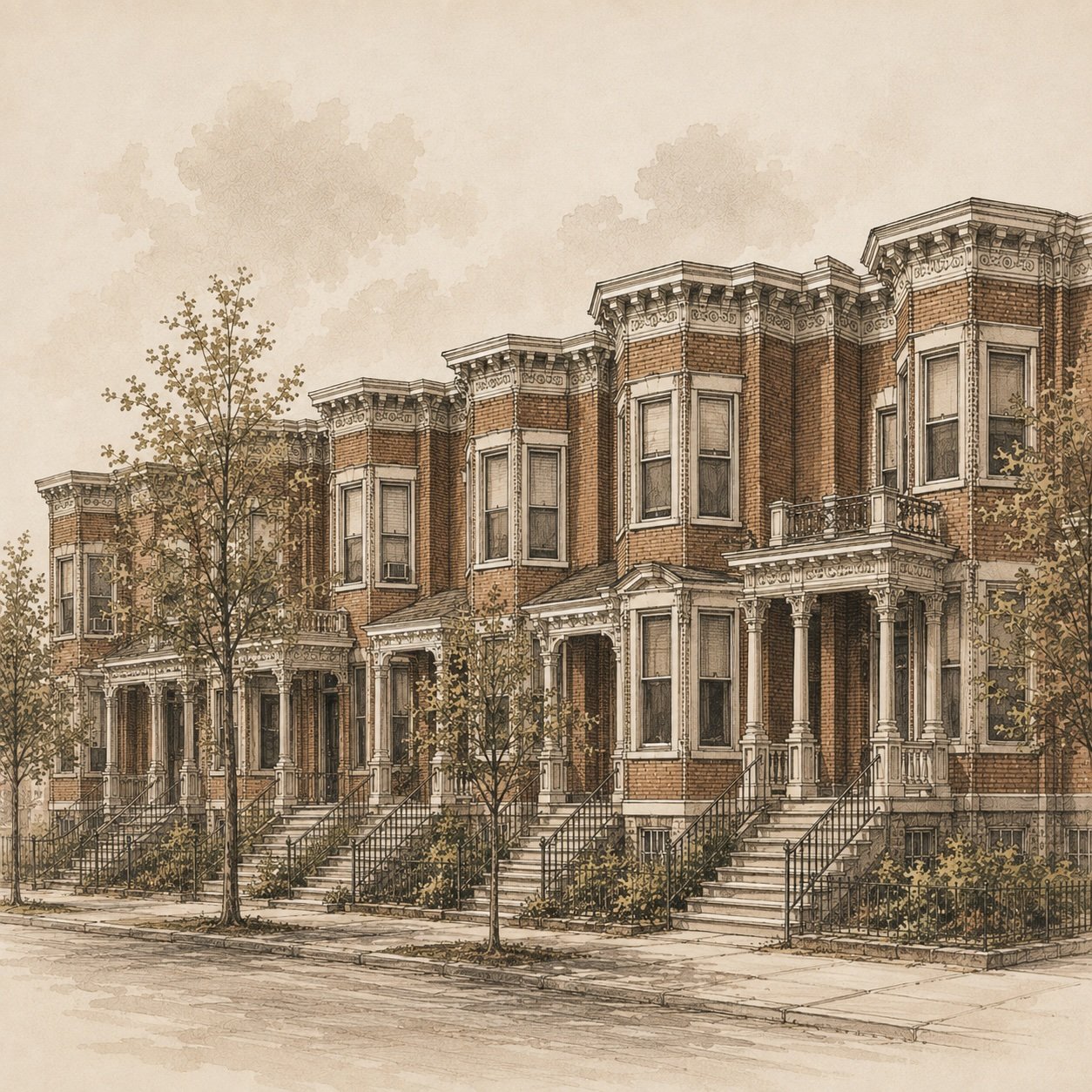
Walk down Floyd Avenue in Richmond's Fan District and you're surrounded by some of the city's most recognizable historic architecture.
What isn't nearly as obvious is who built it.
Some names associated with Richmond architecture have become relatively well known — Albert F. Huntt, D. Wiley Anderson, William C. West and others. But the Fan wasn't created solely by prominent architects designing individual commissions.
It was also shaped by builders and contractors who developed entire groups of houses at a time.
One of the most interesting was George G. Ryan.
According to the Virginia Department of Historic Resources' National Register documentation for the Fan Area Historic District, the firm of George G. Ryan and Associates erected more than forty residences within the Fan, most of them along Floyd Avenue.
That one sentence tells us something important about how the Fan became the neighborhood we know today.
The people who actually built the Fan
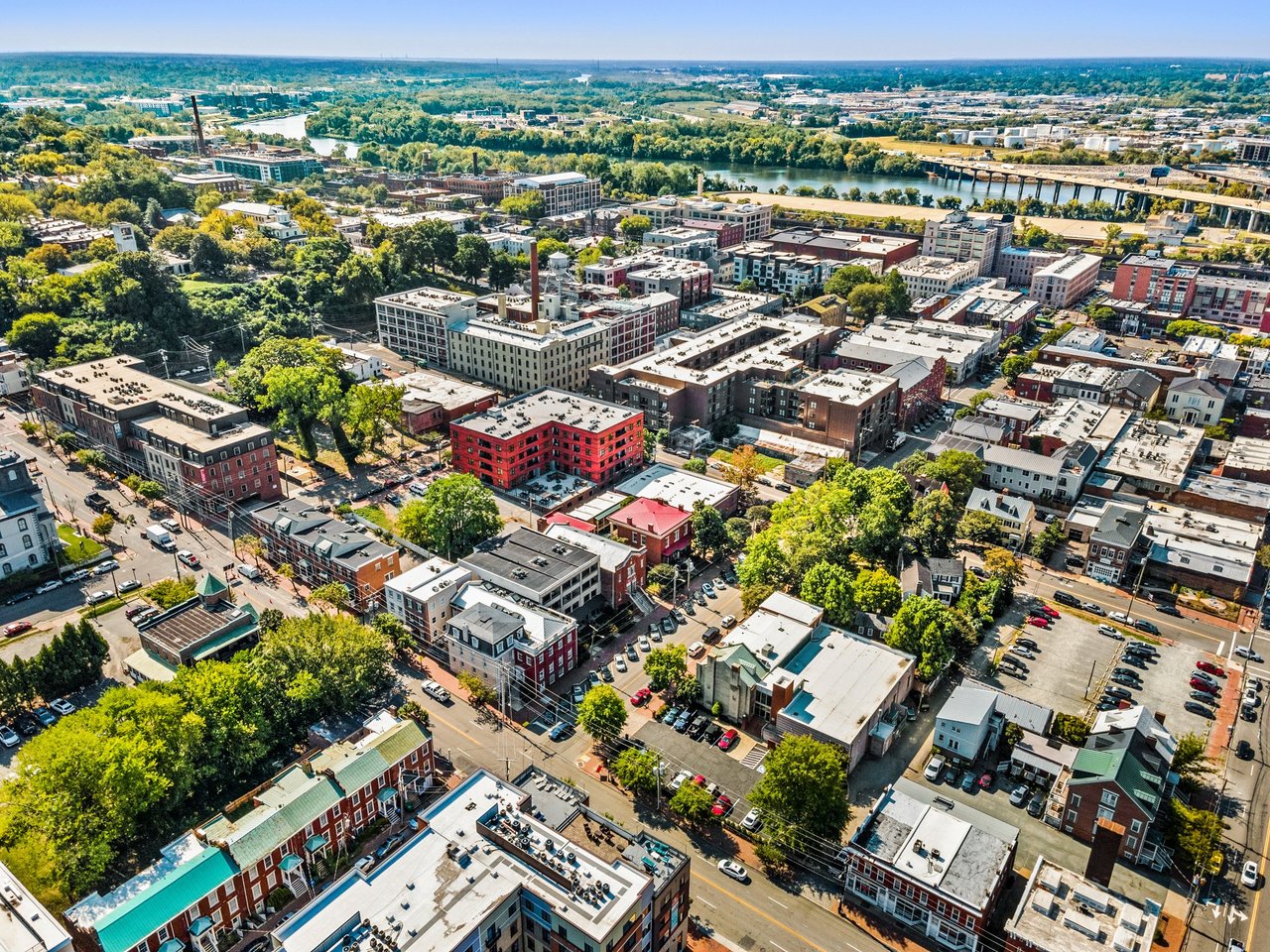
During the late nineteenth and early twentieth centuries, Richmond was expanding rapidly westward.
The Fan developed not simply as a collection of individually commissioned mansions, but through the construction of blocks and groups of speculative houses.
The historic district documentation explains that during the 1890s and early 1900s, entire blocks were being designed and constructed by architect-contractors for speculative development.
Ryan appears to have been a significant participant in that process.
Rather than considering one surviving house in isolation, we can look at runs of neighboring houses and begin to understand how builders like Ryan helped establish the visual rhythm for which the Fan is famous.
George G. Ryan on Floyd Avenue
Ryan's connection to Floyd Avenue is especially significant.
DHR specifically notes that most of the more than forty Fan residences erected by George G. Ryan and Associates were located along Floyd Avenue.
Among the addresses associated with Ryan's work are groups including:
1302, 1304, 1306, 1308 and 1310 Floyd Avenue
and
1513, 1515, 1517, 1519, 1521, 1523, 1525, 1527, 1529, 1531 and 1533 Floyd Avenue.
These are particularly interesting because seeing the houses together changes the way you read the architecture.
Instead of thinking about a single façade, you begin seeing the Fan as it was originally developed — multiple adjoining properties constructed as part of a larger streetscape.
That repetition is one reason the Fan feels so architecturally cohesive even though individual houses contain enormous variation.
115–119 North Lombardy Street
Another documented Ryan project survives just off Floyd.
The Fan Area Historic District documentation identifies the rowhouses at 115–119 N. Lombardy Street as having been erected by contractor George G. Ryan in 1894.
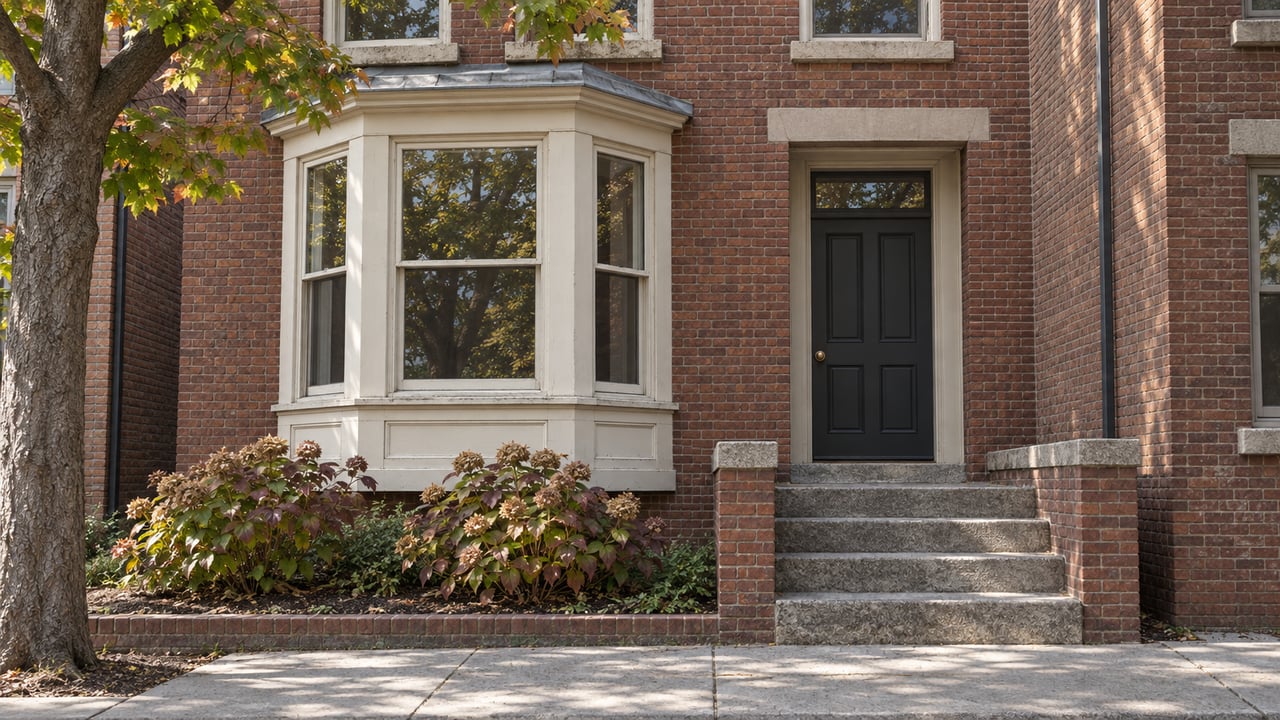
The three houses are representative of the Italianate tradition, with prominent classical cornices and second-story projecting bays.
There's an interesting historical detail here.
DHR notes that by 1894, the Italianate style had already largely lost its popularity.
The houses therefore capture an architectural transition happening throughout the Fan.
Older nineteenth-century traditions were still being constructed while Queen Anne, Romanesque, Colonial Revival and increasingly eclectic architectural expressions were appearing around them.
Builder or architect?
There's another distinction worth making.
The surviving documentation I've found consistently describes Ryan as a contractor and describes George G. Ryan and Associates as having erected these houses.
Unless further historic records establish that Ryan practiced professionally as an architect, I think the more historically accurate description is:
builder, contractor and speculative developer.
But that doesn't diminish his importance.
In many ways, it illustrates something more interesting about historic Richmond.
The Fan wasn't produced only by celebrated architects. Its character resulted from the combined work of architects, builders, developers, craftsmen and property owners.
George G. Ryan represents that second story.
Why this history matters today
When you understand who developed a group of houses, you begin noticing details that are easy to overlook.
Why do several houses share the same proportions?
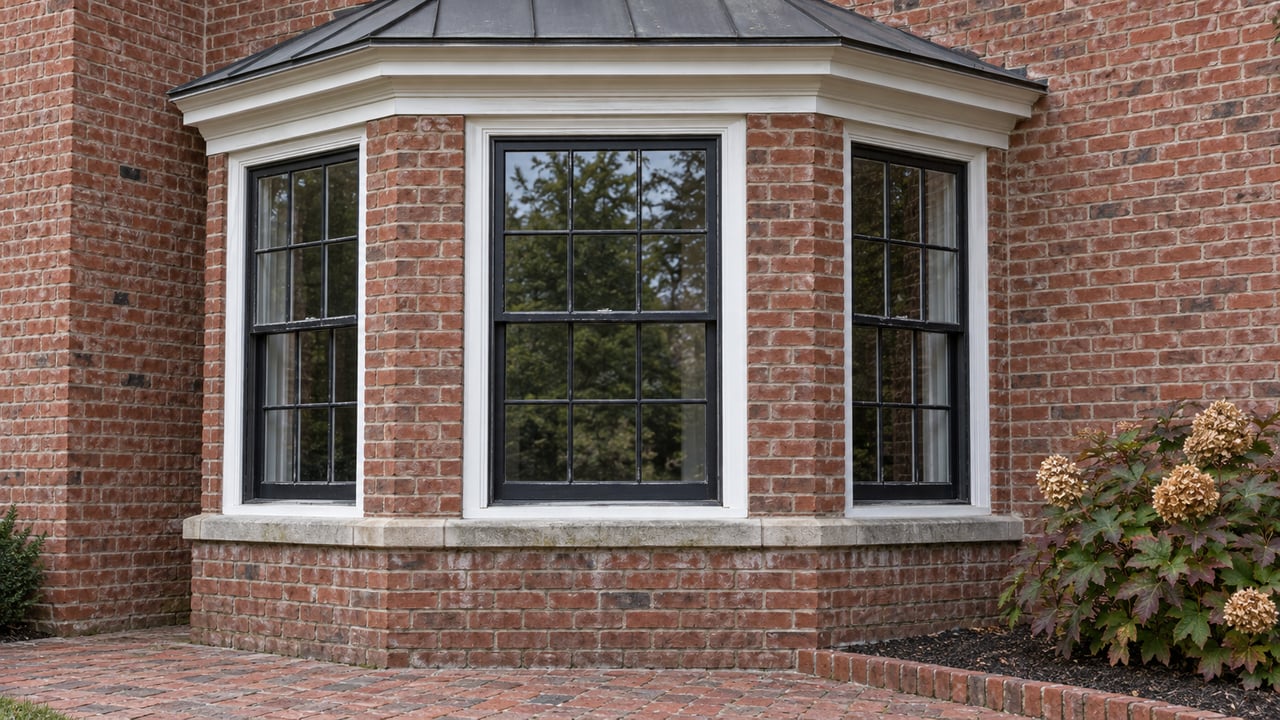
Why do bay windows repeat down a block?
Why do cornices, porches or window openings resemble one another while still changing slightly from house to house?
Sometimes the answer isn't simply an architectural “style.”
It's because the same builder was developing multiple properties.
And in George G. Ryan's case, his footprint appears to extend across more than forty homes in one of Richmond's most architecturally significant neighborhoods.
So the next time you're walking along Floyd Avenue, take another look.
You may be walking past an entire series of houses created by a Richmond builder whose name has largely disappeared from public memory — even though his work remains standing more than a century later.
George G. Ryan helped build the Fan.
And the houses are still telling that story.