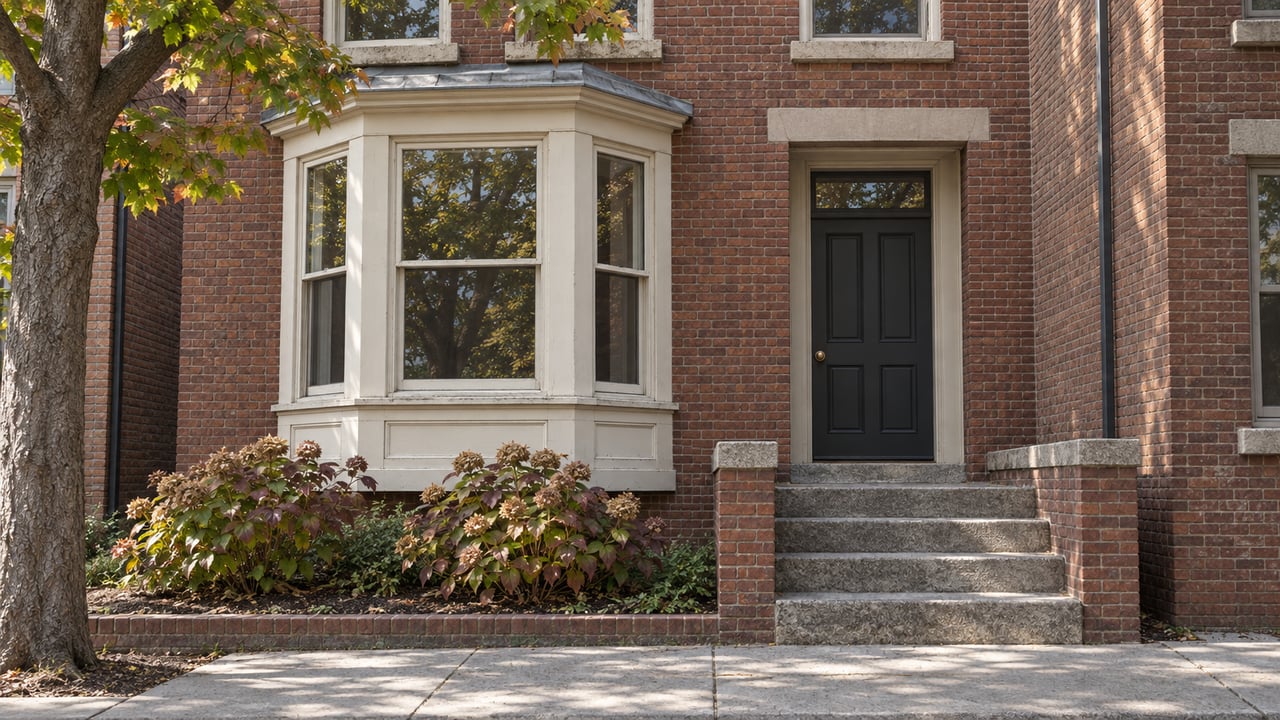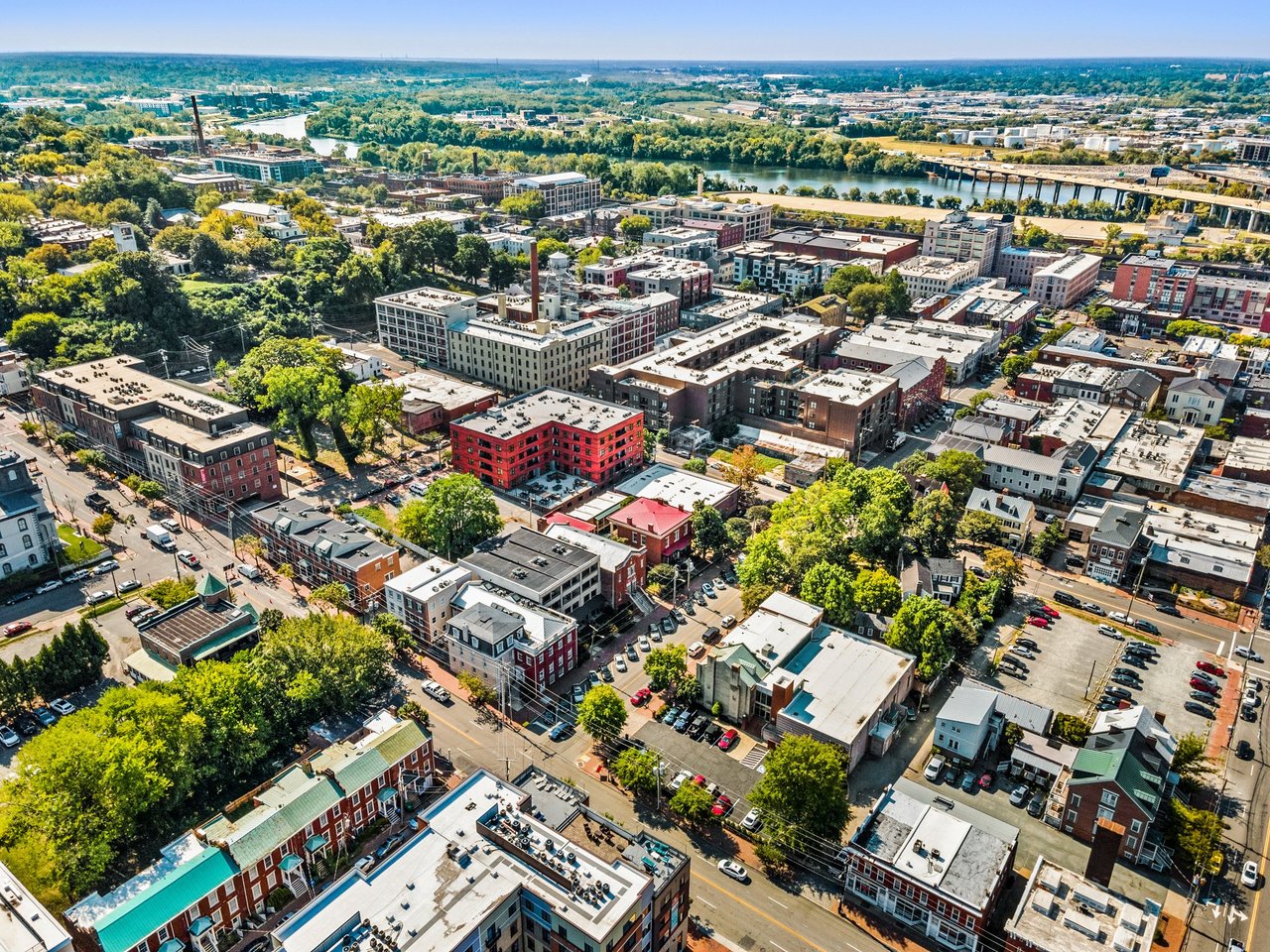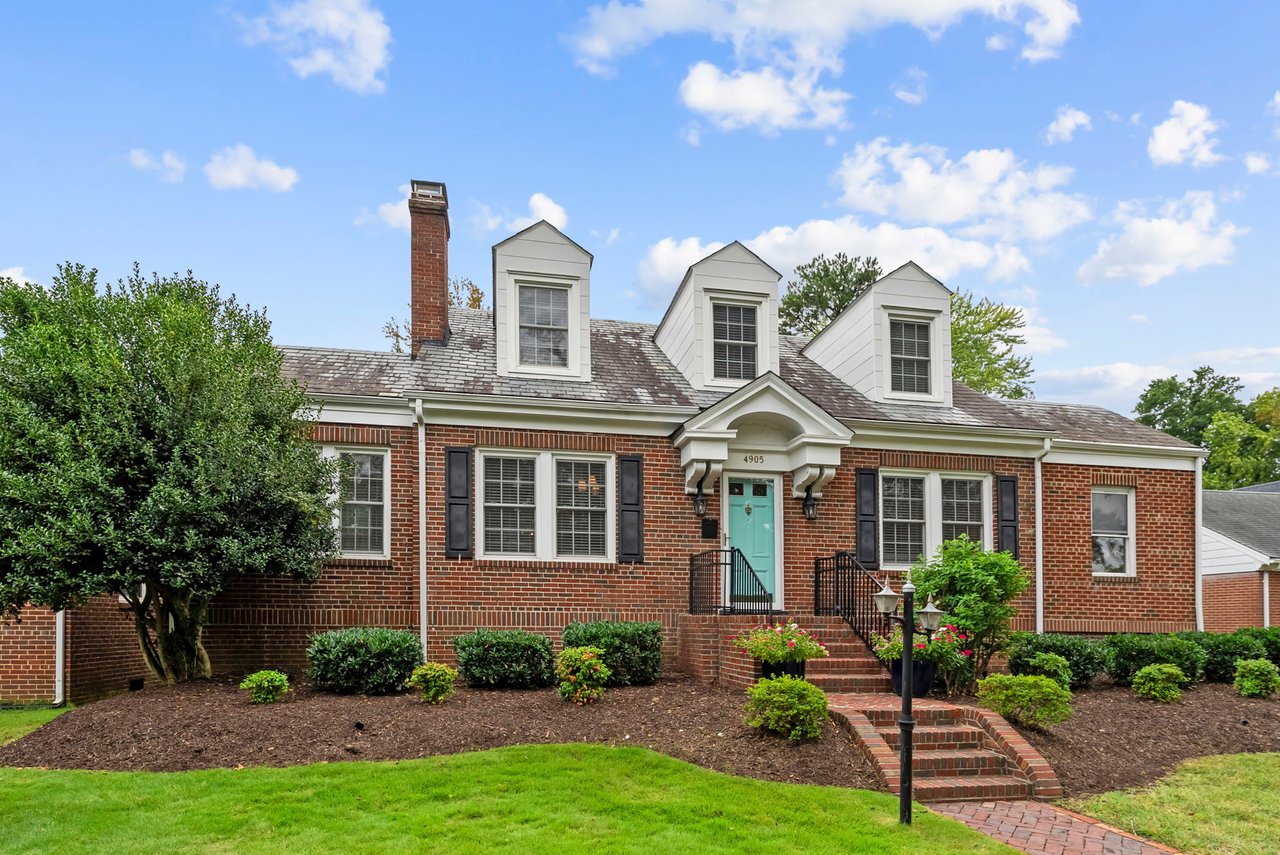
Walk several blocks through Richmond's Fan District and it is easy to assume that every century-old house has its own completely independent story.
Look more closely, however, and another story begins to emerge.
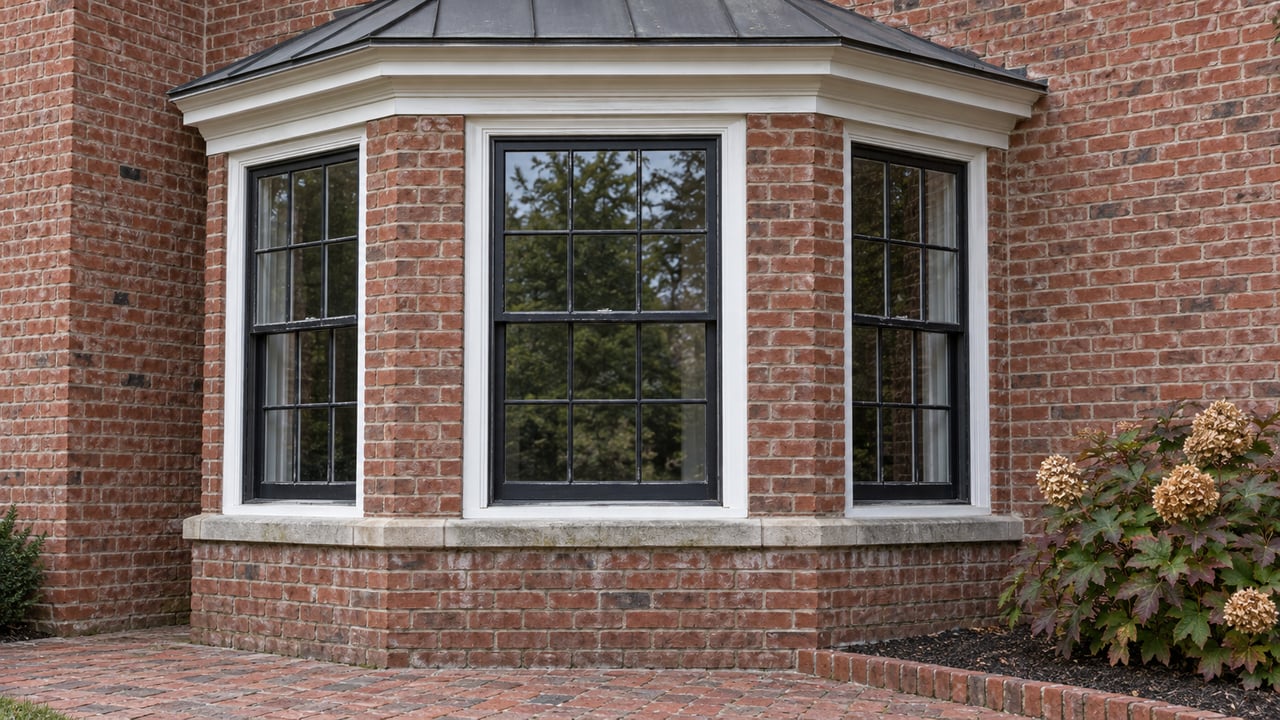
Groups of houses share proportions. Porches repeat. Cornices, dormers and brickwork feel related. Sometimes half of a block seems to belong to the same architectural family even though no two houses are exactly alike.
That was not an accident.
During the extraordinary period of development that transformed Richmond's western neighborhoods during the first decades of the twentieth century, some of the Fan was constructed not one house at a time, but several houses—or significant portions of entire blocks—at once.
Few companies illustrate that story better than C. W. Davis & Bro., later Davis Brothers, Inc.
Virginia Department of Historic Resources documentation describes how builders and contractors working in the Fan developed entire blocks and half-blocks of row houses. DHR specifically identifies Davis Brothers among firms whose names appear on Richmond building permits and notes their activity both north and south of Main Street.
And once you begin following the Davis name through Richmond, their footprint becomes remarkable.
From carpenters to one of Richmond's major building operations
Charles Waddy Davis and his brother Oswald J. Davis established C. W. Davis & Bro. by at least 1905. J. Lee Davis later joined the enterprise and became president in 1915, when the business had evolved into Davis Brothers. Architectural historian Robert P. Winthrop describes the brothers as contractors, developers and building-material suppliers rather than conventional practicing architects.
That distinction is important.
The Davis Brothers weren't simply waiting for someone to hire them to construct an architect's plans. Their interests reached across multiple parts of the real-estate business. J. Lee Davis was also associated with the West End Bank, Davis Land Company and Wellington Brick Company, giving the family interests in land, construction materials, development and finance.
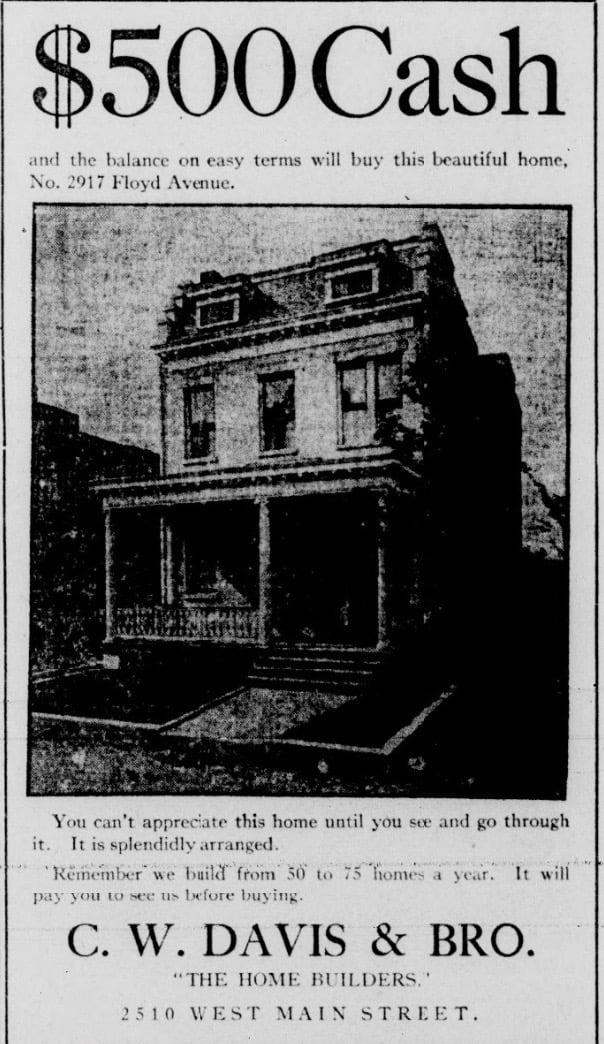
Their own advertisements show how they wanted Richmonders to see them.
A 1911 Richmond Virginian advertisement called C. W. Davis & Bro. “Home Builders” and “Dealers in Builders' Supplies,” while another advertisement that year told prospective buyers that the firm built approximately 50 to 75 homes annually.
This wasn't a boutique operation building one residence every few months.
It was early Richmond production homebuilding.
Their footprint in the Fan District
This is where the story becomes especially interesting for anyone who lives in or walks through the Fan today.
The DHR and building-permit research we are assembling attributes an extraordinary collection of Fan residences to C. W. Davis & Bro. and Davis Brothers, Inc., including groups along:
Floyd Avenue
- portions of the 1600 block
- 1716–1730 Floyd
- 2011 Floyd
- houses in the 2000/2100 blocks, including 2101–2119
- 2310–2320 Floyd
- 2410–2414 Floyd
- 2513–2525 Floyd
Grove Avenue
- 1803–1807 Grove
- 2007 Grove
Hanover Avenue
- 1718, 1720 and 1726 Hanover
- 1917–1923 Hanover
Park Avenue
- 2209 and 2211 Park
Stuart Avenue
- 1903–1909 Stuart
- 2217–2223 Stuart
One particularly well-documented example is 1903, 1905 and 1909 Stuart Avenue. Historic-district research identifies Davis Brothers, Inc. as the builder—and probable designer—of these nearly identical Colonial Revival houses in 1913.
That grouping illustrates something fundamental about the Fan.
Why neighboring Fan houses can look related—but not identical
Richmond wasn't developing the Fan as a neighborhood of identical tract homes.
Companies like Davis Brothers could construct groups of houses using related plans, forms and materials while changing porches, rooflines, dormers, columns and decorative details.
The result was efficiency without complete uniformity.
DHR describes the Fan as remarkably cohesive despite its architectural variety, noting the repetitive scale, mass, materials and ornamentation that tie hundreds of buildings together. The neighborhood's blocks of brick townhouses and row houses were often created by a relatively small group of local architects and contractors.
The Davis Brothers fit directly into that pattern.
Their houses were products of a rapidly modernizing city, but they were designed to feel individual enough that a century later most people walking the neighborhood would never think of them as early production housing.
Craftsman influence—and much more
The firm's work wasn't confined to a single architectural vocabulary.
Winthrop identifies Craftsman and Arts & Crafts influences as particularly important to Davis Brothers' work, but their buildings also incorporated Colonial Revival, Tudor, Spanish and Mediterranean elements.
That flexibility eventually became even more apparent when they moved aggressively into apartment construction.
They didn't stop with houses
The rise of Richmond's professional and middle classes created demand for a different kind of urban housing.
Davis Brothers responded with apartments.
Winthrop's review of Richmond building permits identifies an extraordinary 63 apartment houses associated with the firm.
Among their notable projects were:
The Wilmarth — 1916
A highly articulated apartment building mixing classical elements with Spanish or Mediterranean influence.
The Dorchester — 1918
A larger and more restrained building incorporating the stacked porches that became such a recognizable element of Richmond apartment architecture.
Sulgrave Manor — 2902–2904 Monument Avenue
A courtyard apartment complex completed around 1921–1922 with Craftsman and Tudor influences. DHR's Monument Avenue documentation identifies the building as the Sulgrave Manor Apartments.
Abbyview Apartments — 1922
Another of the firm's more elaborate apartment projects.
Linden Terrace
A related apartment composition along the Boulevard.
And the Davis Brothers' reach extended beyond traditional apartments.
English Village at 3418–3450 Grove Avenue, designed by Bascom Joseph Rowlett and constructed by the Davis Brothers in 1927, became one of Richmond's notable early cooperative residential developments. ArchitectureRichmond describes it as perhaps a masterpiece of both Rowlett and the Davis Brothers.
Commercial Richmond, too
The company was not confined to residential construction.
DHR documentation attributes the circa-1925 commercial building at 314 North Second Street to Davis Brothers, Inc.
The firm also worked with architect L. Otis Spiers on the 1927 conversion of Richmond's former Coliseum at 1339–1363 West Broad Street for the Duplex Envelope Company and automobile-dealership use. DHR identifies Spiers as architect and Davis Brothers, Inc. as general contractor for that work.
By then, the company that had become known for houses in Richmond's expanding western neighborhoods was working on apartments and substantial commercial projects as well.
The company behind the streetscape
There are famous architects associated with Richmond whose names deserve to be remembered.
But understanding the Fan requires knowing the builders and developers, too.
The Davis Brothers represent a different part of the neighborhood's history: the entrepreneurs who figured out how to build beautiful urban housing at scale.
They acquired land.
They supplied materials.
They constructed homes.
They developed apartments.
They participated in commercial construction.
And across streets like Floyd, Grove, Hanover, Park and Stuart, their work became part of the everyday architecture of Richmond.
More than a century later, many of those buildings remain.
So the next time you walk down Floyd Avenue and notice six or eight neighboring houses that somehow seem related, look a little closer.
You may not simply be looking at a collection of old Richmond houses.
You may be looking at the remains of one of the companies that helped build the Fan District itself.