RICHMOND, VIRGINIA
The Fan District
A guide to the iconic historic neighborhood of tree-lined streets, distinctive architecture, local businesses, and a lively community.
RICHMOND, VIRGINIA
A guide to the iconic historic neighborhood of tree-lined streets, distinctive architecture, local businesses, and a lively community.
EXPLORE THE GUIDE
The Fan is one of Richmond’s most recognizable neighborhoods—but understanding it takes more than locating it on a map.
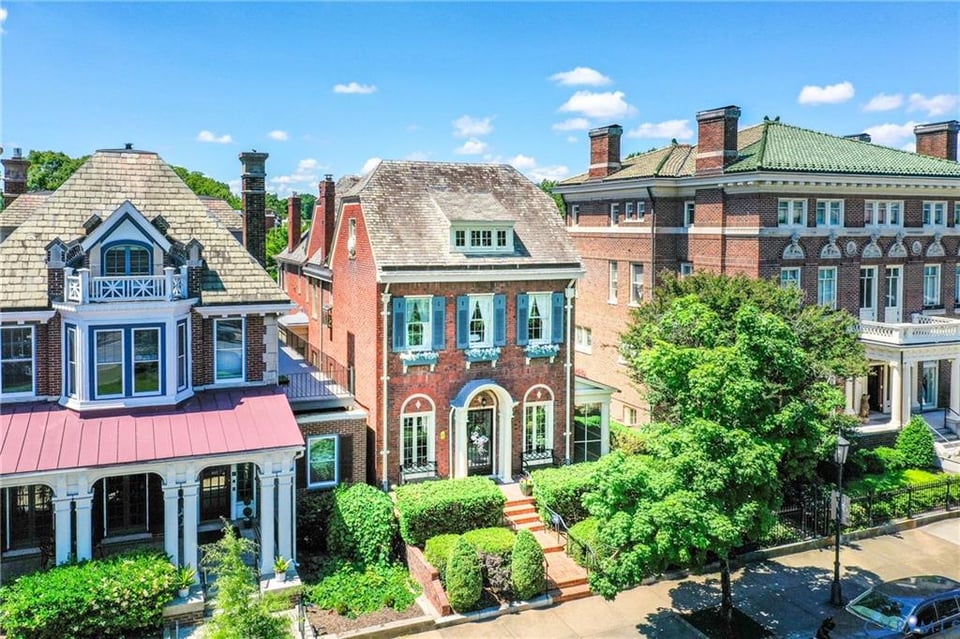
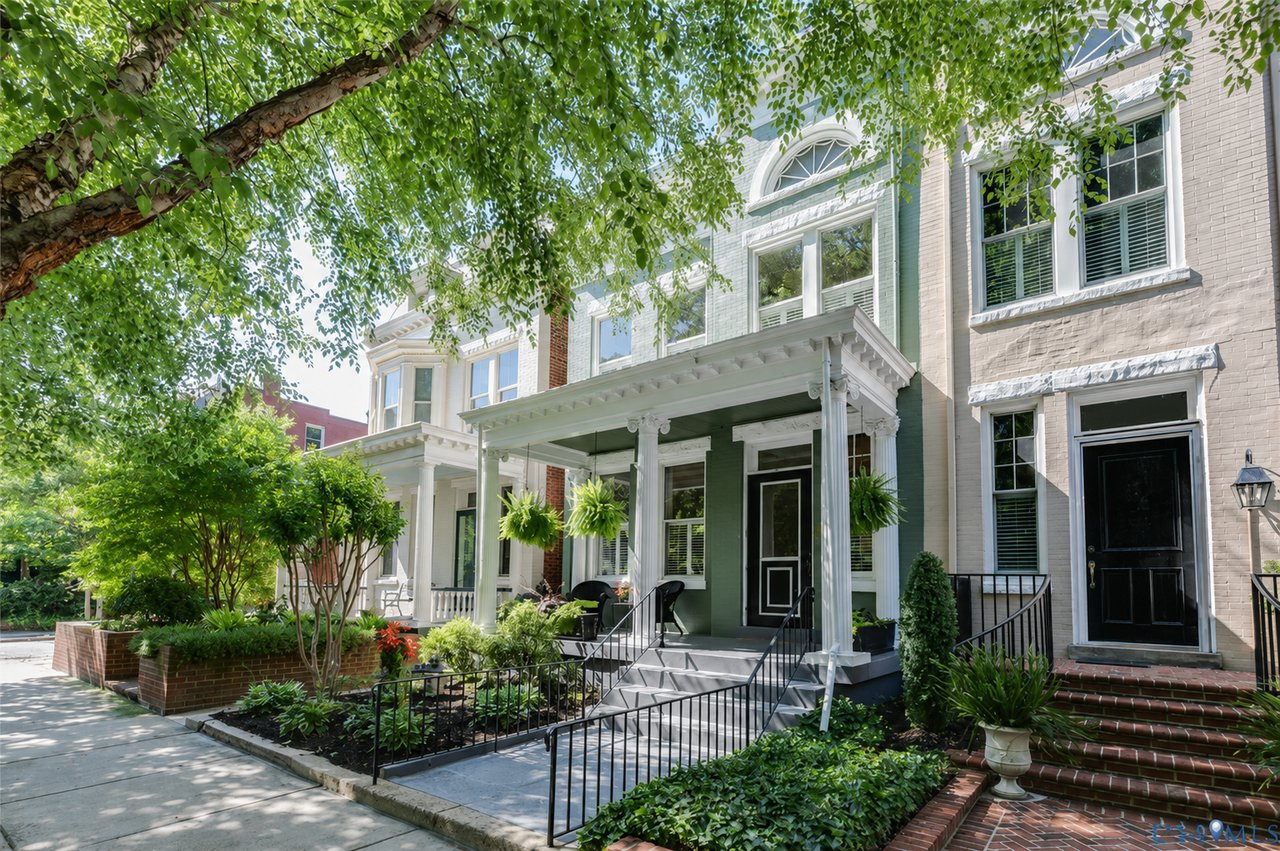
Stretching west from Monroe Park in a distinctive fan-shaped street grid, the neighborhood brings together late-19th- and early-20th-century architecture, tree-lined blocks, front porches and stoops, pocket parks, local businesses, restaurants, churches and gathering places.
The Fan is walkable and closely connected to downtown, Carytown, the Museum District, Byrd Park and the Virginia Museum of Fine Arts. Yet no two streets—or even two blocks—feel exactly alike. Its identity comes from the way houses, blocks, streets and public life work together—not from any single landmark or architectural style.
This guide is for anyone curious about The Fan: its origins, buildings, streets, people, daily life and continuing evolution. Later sections also address buying, selling and caring for its historic homes.
I live in The Fan and study it house by house, street by street and block by block. I hope this becomes a useful resource for residents, visitors, architecture enthusiasts and anyone who wants to understand what makes this part of Richmond so special.
Look at Richmond from above and the name becomes obvious. Several streets spread westward from the area around Monroe Park before gradually transitioning toward the more regular city grid. The resulting shape resembles a fan.
But the neighborhood did not appear overnight. The area was once farmland. In 1817, Jacquelin Harvie proposed the town of Sydney. Although the town itself never fully materialized, its plan continued to influence settlement as Richmond expanded westward. That expansion accelerated during the late nineteenth century, and portions of what became The Fan were annexed into the city as development pushed farther west.
Streetcars helped make that growth possible. Demand from Richmond’s emerging urban middle class encouraged architects, developers, speculative builders and property owners to construct entire rows and blocks of houses. By the early twentieth century, Richmond’s old “West End” was taking shape. Today, we call much of it The Fan.
The Fan developed over decades, which is one reason its streets and buildings contain so much variety.
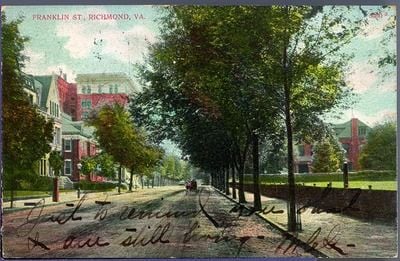
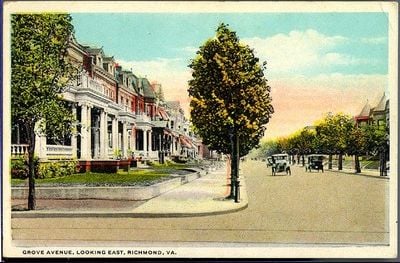
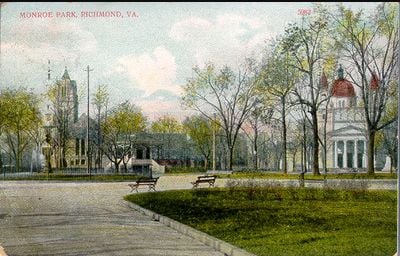
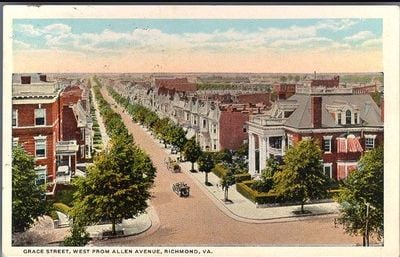
One of the biggest misconceptions about The Fan is that it is simply a neighborhood of Victorian row houses. It is far more complicated than that. The Virginia Department of Historic Resources identifies more than 2,000 buildings within the Fan Area Historic District and notes that the neighborhood’s cohesion comes not from one architectural style, but from the relationships among building heights, setbacks, materials, rooflines, porches and tree-lined streets.
Examine the neighborhood closely and you'll begin building an architectural vocabulary:
The Fan feels cohesive because its buildings relate to one another—not because they are all the same.
To understand The Fan, it helps to understand the people who designed and built it. Some houses were produced by speculative builders. Others were commissioned for individual owners. Some architects designed one house; others left fingerprints across entire blocks and throughout Richmond.
The Fan is best understood alongside the adjoining Monument Avenue and West Franklin Street historic districts. Together, these neighborhoods contain work associated with important Richmond architects and firms including Albert F. Huntt, William Lawrence Bottomley, W. Duncan Lee, Noland & Baskervill and John Russell Pope. Their work belongs to a larger story involving architects, designers, builders, developers and the Richmonders who commissioned and inhabited these houses.
The Fan is not one uniform experience. Its architecture, scale, landscaping and activity can change considerably from street to street—and sometimes from block to block.
The Fan today is both a historic neighborhood and a living, changing part of Richmond. Its streets support everyday rituals: coffee at Lamplighter or Rostov’s; meals at Joe’s Inn, Edo’s Squid or Kuba Kuba; ice cream at Scoop; time in Scuffletown Park; runs along Monument Avenue; and walks to Byrd Park, Carytown and the Virginia Museum of Fine Arts.
What makes the neighborhood feel vibrant is the overlap of old and new. Century-old houses sit beside long-standing institutions, independent businesses and newer arrivals. Residential streets, commercial corners, restaurants, parks, churches and gathering places continue to share the same compact urban space.
Click the button below for a complete picture of today's Fan: a business directory, neighborhood map, events calendar, community resources, and regularly updated housing-market statistics.
History shaped the neighborhood. Daily life keeps changing it.
Imagine two agents walk into the same 110-year-old house. One sees three bedrooms, two-and-a-half baths, 2,400 square feet, an updated kitchen and a nice backyard.
I want to know considerably more. Who built it? Was an architect identified? When was it built? What style is it? Which architectural details remain? Are those floors original? Is that fireplace surround original? What is happening with the cornice? Is that an addition, and when was it constructed? How does this block differ from the one two streets away? What will a discerning buyer actually remember?
Historic homes are emotional purchases. Buyers remember the light through a stained-glass window, the original staircase, a marble mantel, pocket doors, heart-pine flooring, a dramatic bay window or an ornate cornice. They remember an unusually deep lot, a side porch that feels like Charleston or a garage that is extremely difficult to find elsewhere in the neighborhood.
The job of marketing the property is to identify those things before the house is photographed, then build the presentation around them. I want to walk the house beforehand, be there for photography, talk with the photographer about the details that matter, and make sure the videography tells the home’s story.
A remarkable Fan house should be marketed like a remarkable Fan house. Not like inventory.
Two 2,500-square-foot houses are not automatically comparable. A garage, exceptional primary suite, preserved millwork, restored historic windows, deep landscaped yard or prized block can materially change the product. Pricing correctly means understanding comparable sales—and then understanding why those houses sold for what they did.
Before bringing a Fan home to market, it is worth asking who owned, commissioned, designed and built it; when additions were made; which architectural details survive; and what archival maps, photographs, directories or architectural records can tell us.
The simple answer is scarcity. There is only one Fan District, and there are only so many houses on the blocks buyers want most.
Among those houses, an even smaller number combine original architecture, thoughtful renovation, good natural light, usable outdoor space, updated major systems and the bedrooms, bathrooms, parking and floor plan a particular buyer wants.
When a house checks most of those boxes, buyers are comparing it with the possibility that another house like it may not become available for months. That changes negotiation, offer strategy and the importance of terms.
The Fan needs to be analyzed property by property—not only by a citywide statistic.
A beautifully renovated kitchen can distract you from a very old sewer line. Fresh paint can hide old plaster cracking. A slate roof can be an extraordinary architectural feature — and something you need to understand how to maintain. A finished basement can be impressive until you understand where moisture travels.
When I look at a Fan property, I am thinking about:
The goal is not to convince someone that old houses are problematic. It is to distinguish an old-house characteristic from ordinary maintenance, a meaningful defect or something requiring further investigation.
Those distinctions can save buyers from unnecessary fear — and expensive mistakes.
National Register of Historic Places and Virginia Landmarks Register listings are largely honorific and do not, by themselves, impose historic-review requirements on private property owners. Richmond’s City Old and Historic Districts are separate local zoning overlays; exterior changes within those districts may require review by the Commission of Architectural Review and a Certificate of Appropriateness.
Always verify the designation affecting the individual property before planning work.
If you own a home in The Fan, you already know that historic houses ask things of their owners. They reward care, attention and informed decisions—and they are far less forgiving of shortcuts.
Slate and flat roofs, box gutters, masonry and mortar, old plumbing and sewer laterals, plaster, historic windows, chimneys, drainage, crawlspaces and previous renovations all deserve a different kind of evaluation than the systems in a newer house.
The wrong repair can sometimes be worse than the original problem.
Knowing which professionals understand historic construction—and when a repair should preserve, restore or replace—is part of protecting the house and its long-term value.
The Fan is not simply one of the neighborhoods I serve—it is where I live. Its architecture, streets, businesses, parks and daily rhythms are part of my own life, and that proximity has deepened a long-standing interest in Richmond’s historic homes.
I spend time walking the neighborhood, studying its architectural styles, photographing details, researching individual houses and blocks, and paying attention to how one street differs from the next. My work also puts me in regular conversation with owners, buyers, inspectors, contractors and preservation-minded professionals who understand the opportunities and responsibilities of caring for older buildings.
That combination of personal connection and professional experience is why I created this guide. I want it to be useful well beyond a real estate transaction: a place where residents, visitors, architecture enthusiasts, buyers, sellers and anyone curious about The Fan can better understand the neighborhood. When real estate questions do arise, I bring the same house-by-house, block-by-block curiosity to helping people make informed decisions.
Your home has spent more than a century becoming what it is. Its marketing should tell the story.
Find a home whose character, condition and block fit the way you want to live—and understand what you are buying before you compete for it.