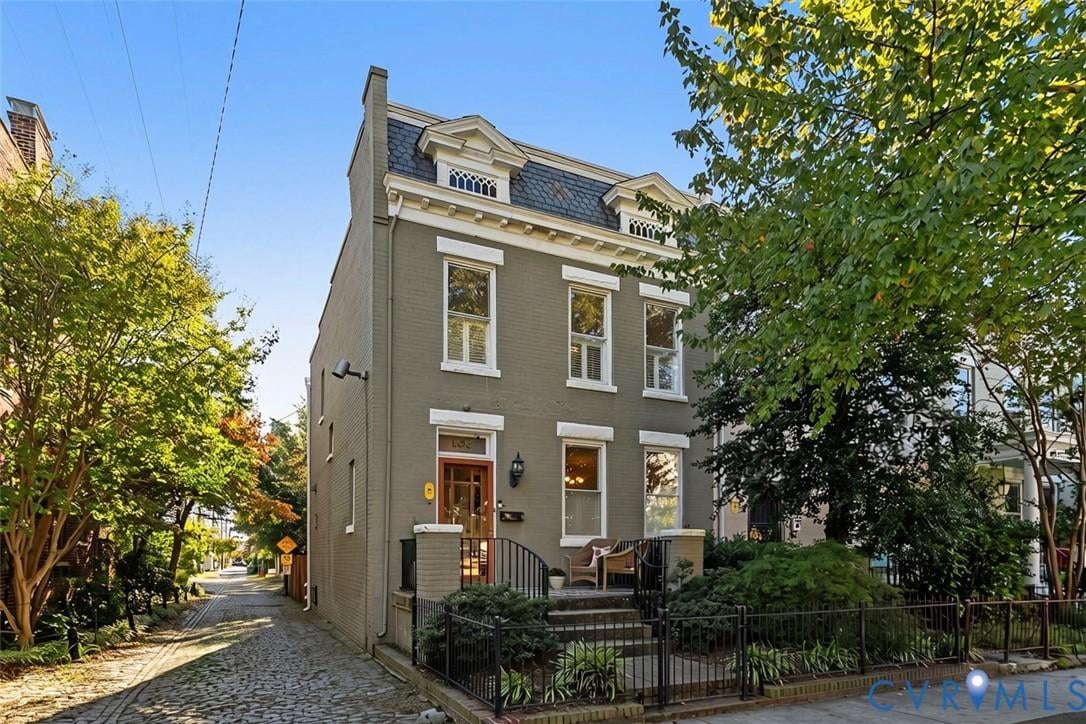
The two buildings at 402 and 404 N. Robinson Street look like plenty of the Fan's commercial-corner buildings, with brick, storefront glass and apartments above. Last November they sold for a combined $1.7 million. That was one piece of a larger deal. According to Richmond BizSense, entities tied to local developer Lewis Little paid $7.6 million in November 2025 for 10 residential and mixed-use buildings across the neighborhood. The list included the building that housed Robinson Street Market at the time of the sale, Idle Hands Bread Co.'s building at 405-407 Strawberry Street, rowhouses on Stuart and Hanover avenues, and a two-story, six-bed apartment building at 301 N. Davis Avenue that sold for $1.1 million.
The seller was a family trust that had bought most of the properties in the 1980s, paying $1.04 million for all 10. Every one of those buildings went up between 1900 and 1911.
If you're looking at a Fan rowhouse as a rental or a house hack, that sale matters more to your numbers than anything VCU builds on Grace Street. The university's next dorm will shift student demand less than its headline number suggests. Cost basis is what has changed: the price a new owner pays and has to earn back from rent.
A 40-year owner and a 2026 owner run different businesses
The family that sold in November 2025 paid about $1.04 million for 10 buildings. The new owner paid about 7.3 times that for the same brick. Rent from those buildings doesn't care who owns them. A student paying rent on Stuart Avenue pays the same amount whether the landlord bought in 1985 or last fall. To the old owner, that rent was a large return on a small basis. To the new owner, it has to cover a basis seven times higher.
This handoff has happened before. BizSense noted that the Little purchase was one of the priciest Fan portfolio sales since the Eck family sold more than 150 Fan properties for nearly $50 million about four years earlier. Both deals point the same way. A generation of landlords who bought cheap is selling to owners with a much higher basis, and every later rental buyer in the Fan competes for buildings at the new owners' prices.
Here's a rough check on what that means for one building. At $1.1 million for six beds, 301 N. Davis Avenue sold for about $183,000 per bed. VCU's off-campus housing guidance, last updated November 12, 2025, puts the average cost for each of five tenants sharing a five-bedroom unit at $773 or more a month, utilities included. That figure covers the whole city, not just the Fan. Even so, six beds at that rate comes to about $55,700 a year. Measured against the purchase price, that's roughly 5 percent gross, before utilities come out and before taxes, insurance, vacancy or repairs on a building more than a century old. The arithmetic is general information, not financial or tax advice. Run your own numbers with your lender and accountant before you act on them.
So an older Fan rental priced at today's levels has to be bought for a reason other than first-year cash flow. That reason might be long-term appreciation, a house hack that lowers your own housing cost, or a unit mix you can improve. Students will keep looking for rooms either way. What changes the math is the purchase price.
The dorm number to plan around is 467
VCU's West Grace Street Housing Project is going up at 700 and 720 W. Grace St., on the block where the BookHolders building used to stand. BizSense reported in September that the Board of Visitors approved a $145.7 million construction contract with Kjellstrom & Lee. The plans call for about 985 beds in a crescent-shaped building with a 13-story western tower and an eight-story eastern wing, at an overall projected cost of $205.7 million. Demolition finished in June 2026, and the building is expected to be ready for students in fall 2028.
Part of the dorm's job is to replace the 518 beds VCU lost when it closed Johnson Hall in 2021. Subtract those and the dorm's net addition comes to about 467 beds.
Compare that with the size of the university. VCU's March 2026 Board of Visitors materials put fall 2025 headcount at 29,288 and project 29,410 for fall 2026. Measured against the fall 2025 count, 467 new beds is about 1.6 percent of the student body. Incoming classes have held steady. The preliminary first-year count for fall 2026 was 4,520, against 4,517 the year before. Reporting this September in The Commonwealth Times, the student paper, put the share of VCU students living on campus at 27 percent, with the rest commuting or renting off campus.
Even before the new dorm opens, campus housing is tight. In August 2025, The Commonwealth Times reported that VCU had turned Gladding Residence Center lounges into overflow rooms. That September, the paper reported that more than 100 students were living in rooms converted from triples to quads. If you're worried about 2028, those 467 net beds will open on a campus that has been running past capacity, which leaves the eastern Fan's room-by-room rental market with most of the students it has now.
February sets the Fan's leasing calendar
VCU's housing timeline is the calendar a Fan rental owner works from. For the 2026-27 year, returning residents applied between January 22 and February 6, and general room selection ran February 24 through 27, with rising sophomores choosing first. VCU tells those students plainly that it does not expect everyone in the process to get a room, and it recommends an off-campus backup plan. Students who already live off campus can't apply until early April.
In 2026, then, a group of students learned in the same late-February week that it needed a lease for the coming August. Off-campus leases in Richmond mostly run 12 months, according to VCU's own guidance, and the university says by-the-room individual leases are very popular with undergraduates. If the 2027 process runs on a similar schedule and you close on a Fan rowhouse after that selection week, many of the students you'd want for August may have already signed somewhere else.
The leasing cycle running this winter, for the 2027-28 school year, comes before the West Grace beds exist. Until the new building opens, VCU's own housing page tells returning students to keep an off-campus backup plan.
New competition sits inside the Fan, not on Grace Street
Owners of older rowhouses face a closer source of competition on Grayland Avenue. On the former Dominion Energy site, D.C.-area developer Audeo Partners started building two four-story apartment buildings at 2425 and 2501 Grayland Avenue in summer 2025. They hold 221 units in total, all market-rate, with a parking garage of more than 200 spaces under the larger building, according to BizSense's October 2025 project report. Across the street at 2400 Grayland, Audeo turned a 101,000-square-foot Dominion office complex into The Carousel, a 125-unit mixed-income building. In that same report, it was 94 percent leased, and rents started around $1,600 a month.
As of October 2025, then, rents at a new Fan building with a gym and coworking space started at about $1,600 a month. VCU's late-2025 citywide estimate for one tenant in a one-bedroom was $1,438 or more a month, utilities included. Single tenants who can pay that much are where new buildings compete hardest. Shared rowhouses rented by the room meet less head-on competition from Grayland Avenue, because new buildings rarely have three or four bedrooms on narrow, character-filled floors. That gap points to the rowhouse layouts most likely to hold their tenants as Fan apartment supply grows.
What to check before you buy a Fan rental
Every building in the November 2025 portfolio dates from 1900 to 1911. Buildings that age vary a lot in condition from one to the next. On a building bought at today's prices, a roof, a chimney liner or old wiring can take away years of the margin the rent math depends on. Read the building as closely as the rent roll. After 300-plus homes built, Gary's first look goes to the structure and systems behind the finishes.
Rules for the land itself may change too. As of mid-November 2026, Richmond's Code Refresh rewrite of the zoning ordinance was still in its third draft, and the Planning Commission review and City Council vote had no scheduled dates. The Fan District Association has publicly raised concerns about the draft. If a purchase price depends on what the new code might allow, you're pricing a draft that City Council hasn't voted on.
If you'd rather live in one unit and rent the others, Gary's earlier look at house hacking a Museum District duplex covers the owner-occupant side, and the mortgage calculator will turn a per-bed price into a monthly payment you can test against your rent assumptions. The Fan neighborhood guide covers the blocks themselves.
If you're weighing a Fan rental before VCU's February room selection, Gary Martin can walk the building with you and price its roof, systems and floor plan against the rent it can realistically earn. Let's talk about your Richmond home.